Why do we need light?
Light plays a fundamental role in enabling vision, supporting well-being, regulating our biological processes, and facilitating human activities.
Light allows us to see: to distinguish colours, navigate our environment, and process images in the brain. It also plays a vital role in maintaining good health. Light helps regulate our circadian rhythm, sleep–wake cycles, and hormone production. It is the most important timer for our biological processes, right down to the cellular level.
We need light to wake up in the morning and darkness to fall asleep at night. #BetterLighting is about the right combination of visual, biological and emotional benefits. It affects our sense of safety, orientation, alertness, cognitive performance, sleep–wake rhythm, mood, energy and relaxation.
The 2017 Nobel Prize in Physiology or Medicine was awarded jointly to Jeffrey C. Hall, Michael Rosbash and Michael W. Young “for their discoveries of molecular mechanisms controlling the circadian rhythm”. Their work helped explain how light synchronises the 24-hour biological clock.
As we age, our eye lenses deteriorate. Older adults need more and better light for clear vision and to support their circadian system. Lighting needs change significantly with age.
For example, a 70-year-old requires twice as much light as a 30-year-old.
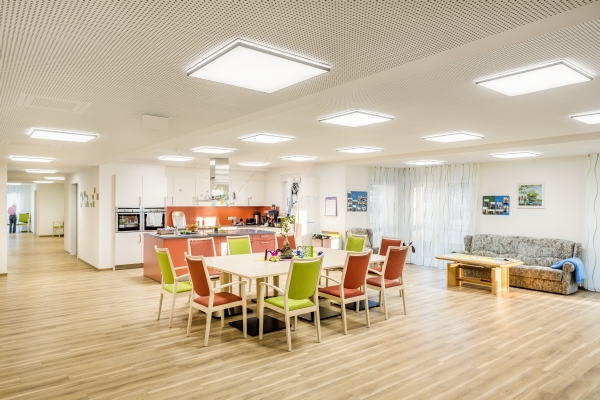
Comfortable indoor lighting supports well-being and productivity.
People spend 90% of their time indoors.
Buildings are designed to protect us from outdoor weather conditions—rain, cold and heat—enabling us to live and work in comfort.
Good lighting is an essential component of a healthy building, alongside indoor air quality, thermal comfort and suitable acoustics. Effective lighting systems respond instantly to user needs, reduce energy consumption, and enhance the usability and comfort of the space.
What is good lighting?
Minimum light quality requirements are described in European standards (e.g. EN 12464 Lighting for workplaces).
Light quality requirements for visual effects of light, such as:
- Amount of light: horizontal and vertical Illuminance.
- Colour of light: lighting spectrum (typically represented in colour temperature CCT and colour rendering CRI).
- Quality of light: good illumination uniformity, no temporal light artefacts and no glare.
For non-visual effects of light:
- Intensity, spectrum and timing/duration of light exposure.
Also, let’s not forget about the impact of light on well-being: few elements influence how people experience a space as profoundly as light, shaping both perception and mood.
To summarise, we need the right light for our activities in the right place at the right time.
This requires intelligent and digital lighting:
- Dynamic lighting allows lighting levels to be changed to suit the needs.
- Tuneable lighting allows variation of the light spectrum.
- Dynamic and tunable lighting enable Human-Centric Lighting (HCL).
- HCL supports health, well-being and performance of humans by combining visual, biological and emotional benefits.

Warm, tunable lighting supports mood and well-being.
Energy saving is a given with good lighting
Lighting plays an integral part in significantly reducing the energy consumption and operating costs of buildings, while effectively contributing to healthier indoor spaces. In Europe, lighting alone accounts for around 11% of household electricity use and 14% in commercial buildings. The good news? Efficient and intelligent lighting systems already exist.
They offer cost-effective, immediate solutions to reduce energy consumption and cut CO₂ emissions. Many assume the transition to LED lighting is complete, but Europe is only halfway there. Going beyond LEDs, adding sensors and controls can yield up to 80% energy savings compared to conventional lighting.
Energy savings in lighting will come from better design and the wider, more effective use of lighting controls. Moving beyond LEDs by adding sensors and controls can deliver up to 80% energy savings compared to conventional lighting.
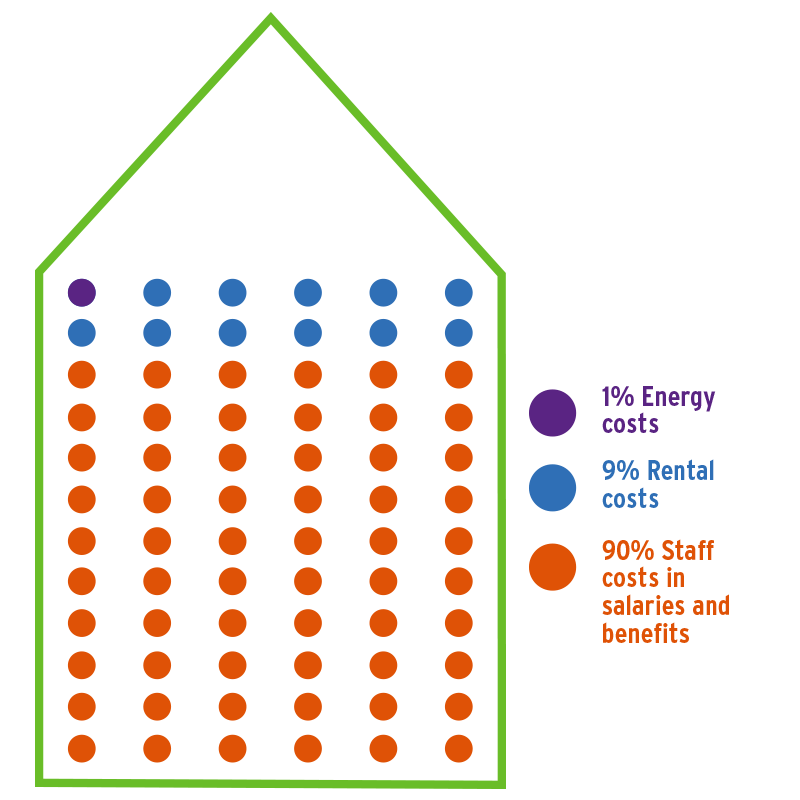
Optimised lighting systems reduce energy use and operating costs.
Economical aspects
Buildings are the single largest energy consumers in Europe. Around 40% of the energy consumed in Europe is used in buildings. To improve their energy performance across the EU, the Energy Performance of Buildings Directive (EPBD) sets legal requirements. To reduce energy consumption and emissions, it promotes the renovation of existing buildings, the integration of renewable energy sources and stimulates the use of smart digital technologies in existing and new buildings.
In Europe the maximum total annual electricity savings for optimised lighting system designs with controls (depending on the reference light source scenario) are (2016 Preparatory study on lighting systems):
- 20–29 TWh/year in 2030
- 48–56 TWh/year in 2050
Office space optimisation must also form part of a green building strategy, from improving how spaces are used to implementing hot-desking and flexible work areas. Lighting control systems can collect data on factors such as occupancy, providing valuable insights into how spaces are used and what is truly needed. This can increase space-use efficiency by up to 30%, ultimately reducing rental costs. Optimising the light and temperature conditions at the workplace and throughout the building also leads to improving the productivity and well-being of employees. In the study conducted by CBRE, a finding was the increase in people’s performance of 12%, when the correct lighting was applied.
Read more about solutions